What Is a Full Spectrum LED Light? Benefits & How to Choose | Hongbo Lighting
If you have spent any time shopping for lighting in the past two years, you have probably seen the phrase "full spectrum LED" on product pages, in supplier catalogs, and across lighting industry media. The term sounds scientific and premium — which is exactly why it is also one of the most abused phrases in the lighting business.
Some manufacturers use it to describe genuinely high-quality light sources that mimic natural daylight. Others slap the label on ordinary LED chips and hope buyers cannot tell the difference. As a factory that produces full spectrum wooden lighting fixtures, we get asked about this constantly: importers want to know what the term actually means, whether their customers will feel the difference, and how to verify quality before committing to a bulk order.
This guide answers all three questions, with no marketing fluff. By the end, you will know how full spectrum light works, what the real benefits are (and what is exaggerated), and five practical tests to run before you place an order with any supplier.
What "Full Spectrum" Actually Means
Sunlight contains energy across the entire visible spectrum, from violet through blue, green, yellow, orange, and red — and a continuous, smooth curve in between. When physicists plot the wavelengths of daylight, the line has no gaps and no sharp spikes.
An ordinary LED does not work this way. Standard white LEDs produce light using a blue chip coated in a phosphor layer. The result looks white to the eye, but when you plot its spectral power distribution, you see a tall, narrow blue spike and a couple of uneven humps. Large portions of the spectrum are weak or missing entirely. This is why colors can look flat, gray, or slightly "off" under cheap LED lighting, even when the room seems bright enough.
A full spectrum LED is engineered to close those gaps. Through improved phosphor formulations and, in better products, multi-chip designs, the light output follows a much smoother, more continuous curve that resembles daylight. The color rendering gets dramatically better, and the quality of the light feels noticeably more natural — the difference is often described as the room "opening up."
One important clarification: full spectrum is a design goal, not a certified standard. There is no ISO certificate that makes a light officially "full spectrum." That is precisely why buyer-side verification matters, and we will get to the testing methods shortly.
The Real Benefits — What the Science Supports
1. Color rendering that finally looks natural
The most measurable benefit is color rendering, expressed as the Color Rendering Index (CRI). Ordinary LEDs typically sit at CRI 70–80. Full spectrum products start at CRI 90 and the better ones reach CRI 95 or higher, with strong R9 values — R9 being the deep-red component that standard LEDs struggle with most, and the one that matters enormously for wood tones, skin, food, and textiles.
For a furniture or lighting retailer, this is not a subtle detail. Under a CRI 70 lamp, a walnut dining table loses its warmth and grain depth. Under CRI 95+ full spectrum light, the same table shows the rich, honeyed figuring that convinced the customer to buy it in the first place. Showroom owners who switch to high-CRI lighting routinely report that customers perceive products as higher quality — without changing a single product.
2. Reduced eye strain in daily use
The human visual system evolved for daylight, not for spiky artificial spectra. While research into "light quality" is still developing, multiple studies in workplace and educational settings have associated more daylight-like lighting with reduced visual fatigue, fewer headaches, and better reported comfort during long exposure hours.
This matters most for the spaces where people actually live and work for extended periods: studies, home offices, children's rooms, and kitchens. It is one reason full spectrum wooden ceiling lights have become a popular choice for reading and working areas rather than just decorative spaces.
3. Better support for circadian rhythm (when tuned correctly)
Light is the primary signal your body uses to set its internal clock. Daylight-like spectra during the day help suppress melatonin and maintain alertness; warmer, dimmer light in the evening allows it to rise naturally.
Full spectrum products with tunable or tri-color modes let a household approximate this pattern: bright, daylight-like light for mornings and work hours, warm light for evenings. We build three-color switching plus continuous dimming into our ceiling light lines precisely for this reason — the spectrum alone is only half of the story; controllability completes it.
4. What is exaggerated
Honesty builds longer business relationships than hype, so let us be direct about two common overclaims.
First, "full spectrum LEDs cure seasonal depression" — no. Light therapy for SAD is a medical application involving specific, much higher illuminance levels under clinical protocols. A home fixture is not a medical device, and no responsible manufacturer should market it as one.
Second, "full spectrum light makes plants grow better indoors" — only partially. Plant growth depends on specific wavelengths in the blue and red ranges that horticultural LEDs target deliberately. A general-purpose full spectrum ceiling light is designed for human vision, not photosynthesis. If a supplier claims their ceiling light is also a grow light, that is a marketing department talking, not an engineer.
Full Spectrum vs. Ordinary LED: What Actually Differs
Buyers do not need a physics degree, but four specifications separate real full spectrum products from relabeled ordinary ones. Ask for all four on paper, in the specification sheet, before ordering samples.
CRI of 90 or above, with R9 disclosed. If a supplier quotes only "CRI 80+" or avoids the R9 number, the product is ordinary LED with better copywriting. Genuine full spectrum sources proudly disclose R9 values of 50 or higher, because that is the hardest number to fake.
CCT tolerance and stability. Cheap LED bins drift noticeably in color temperature — the "greenish" or "pinkish" tint you sometimes see in bulk installations. Reputable full spectrum suppliers use tight color bins (a 3-step MacAdam ellipse or better), which matters enormously when one project uses dozens of identical fixtures.
Flicker performance. Inferior drivers produce invisible flicker that contributes to eye strain and shows up as banding in smartphone video. Ask for the flicker index or percent flicker specification, and check whether the fixture uses a flicker-free driver at low dimming levels, where the problem is most common.
A spectral power distribution chart. Every serious LED manufacturer can produce an SPD graph for their light source. If the sales team cannot produce one within a day, they are buying chips from a broker and do not know what is inside them.
Five Practical Tests Before You Place a Bulk Order
Specification sheets can be fabricated; physical samples cannot. When you receive samples from any supplier — including us — run these checks.
The red test. Hold something genuinely red (a tomato, a red apple, a red-colored fabric swatch) under the light and compare it against a window with daylight. Under full spectrum light, the red stays rich and saturated. Under a poor LED, it looks dull, slightly brown, or muddy. This single test exposes weak R9 faster than any instrument.
The skin tone test. Look at your own hand under the light versus near a window. Cheap LEDs make skin look gray or sallow; high-CRI light renders skin naturally. This is why portrait studios, cosmetic retailers, and dental clinics obsess over CRI — the effect is immediately visible.
The smartphone camera test. Point your phone camera at the lit fixture. If you see dark bands rolling across the screen, the driver flickers. Some flicker is invisible to this test at high frequencies, so treat visible banding as a definitive fail rather than a pass/fail for the whole batch.
The dimming test. If the fixture claims dimmability, dim it to its lowest setting and check three things: visible flicker, audible buzzing, and color shift. Full spectrum fixtures with quality drivers hold color temperature stable across the dimming range.
The warm-white check. Switch to the warmest mode (2700K or similar) and look for consistency across multiple samples. Color mismatch between "identical" fixtures — one slightly green, one slightly pink — reveals loose binning and will become a customer complaint the moment your buyer installs ten of them in one room.
Why We Build Full Spectrum Into Wooden Fixtures
There is a natural pairing between solid wood and high-quality light that most of the lighting industry ignores. Wood finishes are among the most spectrum-sensitive surfaces in interior design: a walnut grain, an oak texture, or a hand-oiled beech surface simply does not look like itself under CRI 75 lighting. The warm figuring that sells wooden fixtures disappears under the very lights they are sold with.
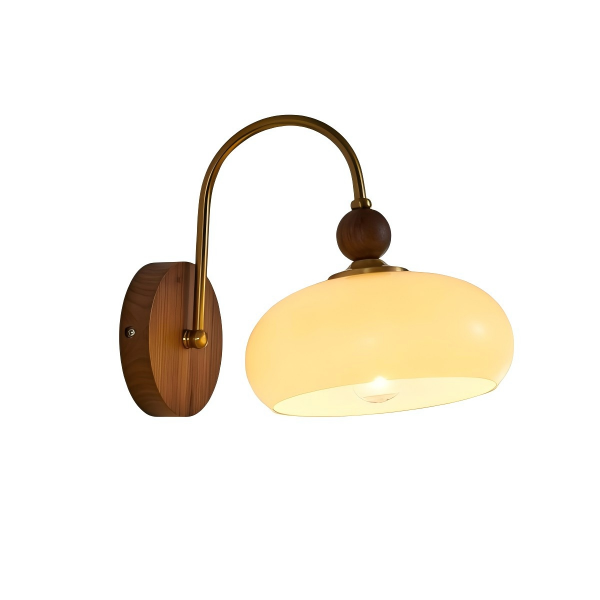
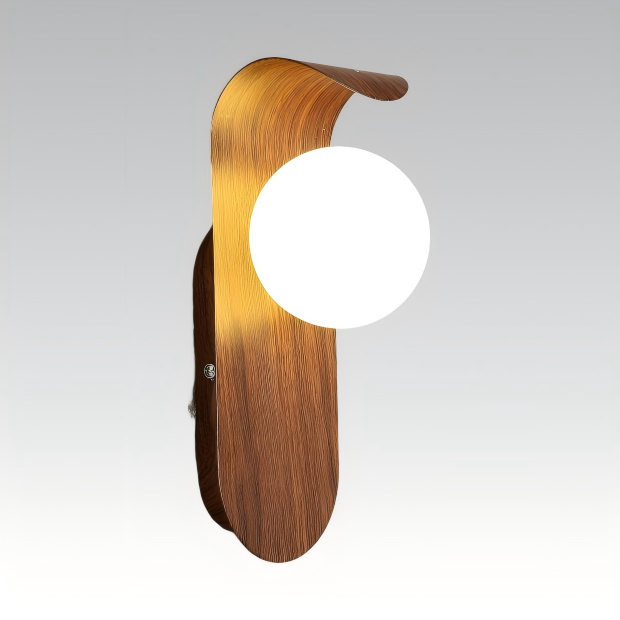
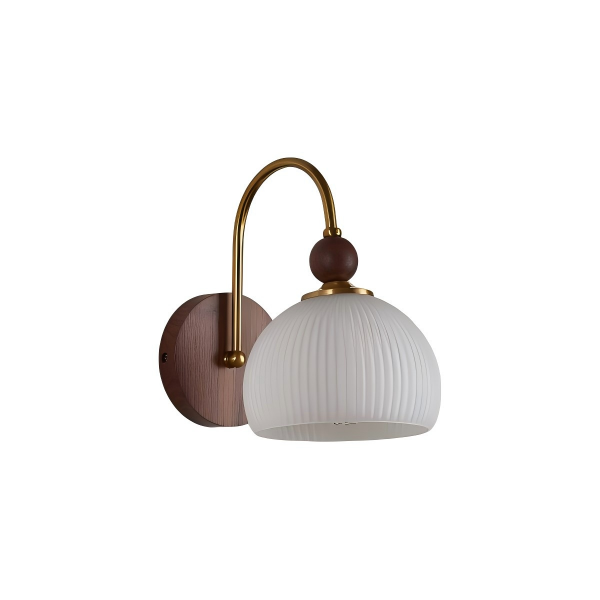
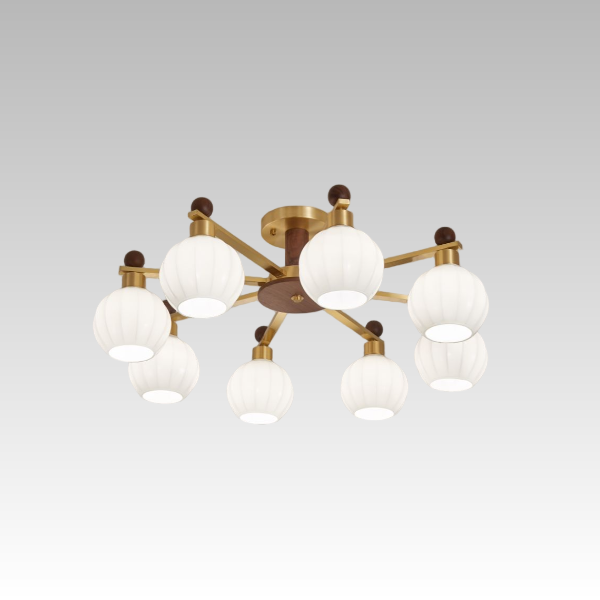
This is why every wooden ceiling light, chandelier, wall light, and spotlight we manufacture pairs FSC-certified solid wood with full spectrum LED sources rated CRI 95 and above, three-color temperature switching, and continuous dimming. The wood gives the light warmth and character; the light, in turn, renders the wood honestly. Our factory has shipped these combinations to customers across more than 80 countries, from residential projects to hospitality installations where color quality is contractually specified.
If you are evaluating wooden lighting suppliers for your brand, we are happy to send samples so you can run every test described above on our products — including the red test. That is a request we always welcome, because it is exactly how we evaluate our own incoming LED batches before they ever reach a production line.
Frequently Asked Questions
Is full spectrum LED worth the extra cost for residential lighting?For rooms where people spend long hours — living rooms, studies, kitchens, children's rooms — the difference in comfort and color quality is immediately noticeable, and the price premium per fixture has narrowed considerably. For utility spaces like storage rooms or garages, ordinary LEDs are perfectly adequate.
Does full spectrum mean brighter light?No. Brightness is measured in lumens; full spectrum describes the quality and continuity of the spectrum. A full spectrum fixture can be any brightness level. What changes is how accurately colors appear at that brightness.
What CRI should I look for when buying?CRI 90 is the practical minimum for anything marketed as full spectrum. For applications involving wood, textiles, food, or cosmetics — showrooms, dining spaces, retail — look for CRI 95+ with a disclosed R9 value.
Can I get full spectrum light in warm color temperatures?Yes. Spectrum quality and color temperature are independent specifications. A good full spectrum fixture delivers high CRI at 2700K, 4000K, and 6500K alike, which is exactly what our three-color switching products are designed to do.
Do full spectrum LEDs last as long as ordinary LEDs?Quality full spectrum chips from reputable manufacturers carry the same 25,000–50,000 hour rated lifetimes as standard LEDs. Lifetime is determined primarily by the driver and thermal management, not the phosphor formulation — which is one more reason to test the driver, not just the light.