What factors are most often overlooked when choosing a ceiling light?
When buying ceiling lights, many people focus only on price and appearance, overlooking key details that truly affect user experience. As the primary lighting solution for commercial spaces, the choice of ceiling lights directly impacts long-term comfort and maintenance costs.
1. Why have ceiling lights become the top choice for commercial spaces?
Compared to pendant or recessed lights, LED ceiling lights offer clear advantages in commercial settings: flexible installation height, uniform light distribution, and easy cleaning and maintenance. Especially in areas requiring broad base lighting—such as offices, classrooms, and hallways—ceiling lights provide seamless illumination without hotspots or dark corners. Today’s mainstream LED sources boast long lifespans and sufficient color rendering to meet most commercial needs.
However, ceiling lights are not simply “install-and-forget” fixtures—choosing the wrong type can lead to frequent replacements or costly retrofits later. Clarify your core needs before making a decision.
2. What is the true value of ceiling lights?
The core value of ceiling lights lies in their "invisible service": good design should make the fixture itself disappear, leaving users to enjoy only comfortable light. This depends on three critical factors:
- Light quality: High color rendering index (CRI) ensures accurate color reproduction; for commercial spaces, models with Ra ≥ 80 are recommended.
- Anti-glare treatment: Acrylic diffusers offer better light diffusion than standard plastic, reducing direct glare.
- Installation compatibility: Ultra-thin models suit low-ceiling spaces, while high-power units require attention to structural load capacity.
Remember: Ceiling lights are long-term infrastructure. Spending an extra 10% upfront on the right model can save up to 30% in maintenance costs over time. Commercial procurement should consider lifecycle value.
3. How to select the right ceiling light based on space requirements?
Different spaces have vastly different lighting needs. Here are recommendations for three typical scenarios:
1. Low-ceiling spaces: Choose ultra-thin ceiling lights
- Hallways and entryways with ceiling heights under 2.6 meters
- Keep thickness under 5 cm to avoid a cramped feel
- Prioritize side-emitting designs for softer light
2. Regularly shaped spaces: Opt for square ceiling lights
- Meeting rooms, offices, and other rectangular areas
- Aligning fixture edges parallel to room orientation enhances harmony
- Pay attention to aspect ratio to avoid visual imbalance
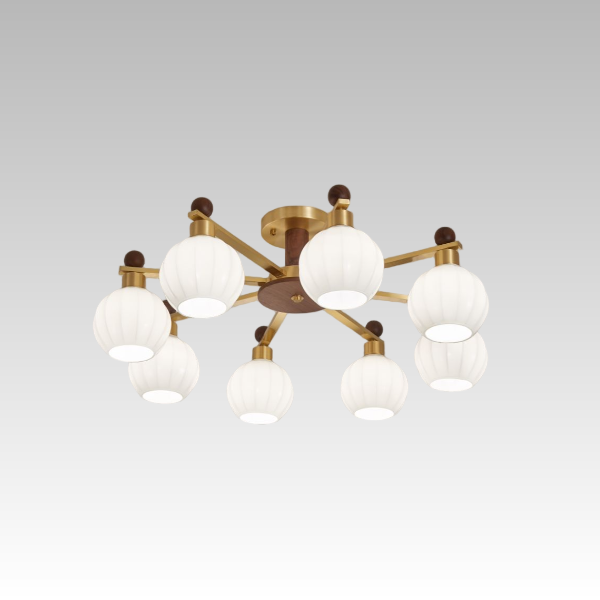
3. Creative spaces: Consider decorative models
- Kindergartens, exhibition halls, and other spaces needing ambiance
- Clouds, leaves, and similar shapes can enhance thematic expression
- Ensure design does not compromise actual lighting performance
Key principle: Define the primary lighting function first, then consider aesthetics. Functionality comes before form.
4. What supporting equipment is needed after installing ceiling lights?
Many people only realize after installation that additional components are required:
- Control solutions: For large areas, use remote-controlled group operation; multi-lamp coordination is more convenient than individual switches.
- Dimming capability: In meeting rooms and exhibition spaces, install dimmer switches to adapt flexibly to different scenes.
- Power compatibility: In renovation projects, verify existing wiring meets LED driver requirements.
Pro tip: Planning control systems ahead saves far more effort than retrofitting later. Consider smart controls before purchasing.
5. What should you keep in mind during daily use?
Several easily overlooked maintenance tips:
- Cleaning schedule: Wipe acrylic diffusers quarterly to prevent dust buildup from reducing light transmission.
- Heat dissipation check: Ensure adequate ventilation around high-power fixtures.
- Wiring inspection: In older buildings, regularly check lamp connection cables.
- Secure installation: In vibration-prone areas, use reinforced mounting brackets.
Maintenance mantra: Clean regularly, ensure heat dissipation, inspect wiring, secure installation. These four steps extend lamp life.
When selecting ceiling lights, start by clarifying spatial functional needs, then match light performance, and finally consider aesthetic design. In commercial settings, the stability of LED power supplies and the convenience of control systems are often more important than the luminaires themselves. Remember: good lighting design is when people forget the fixtures exist.